To feel the atmosphere of Lviv, all you need is to set off on a walk through the historic center, where old buildings, courtyards, churches, and cafés stand side by side. But when you arrive for the first time, the question of where to go in Lviv becomes not so simple: there are many landmarks, and there is usually not enough time for everything.
In a single trip, you are unlikely to see this city in full. You can focus on the main landmarks, walk through the Old Town, or devote a day to architecture and unhurried strolls. So what exactly to see in Lviv depends primarily on how much time you have and how you want to experience the city.
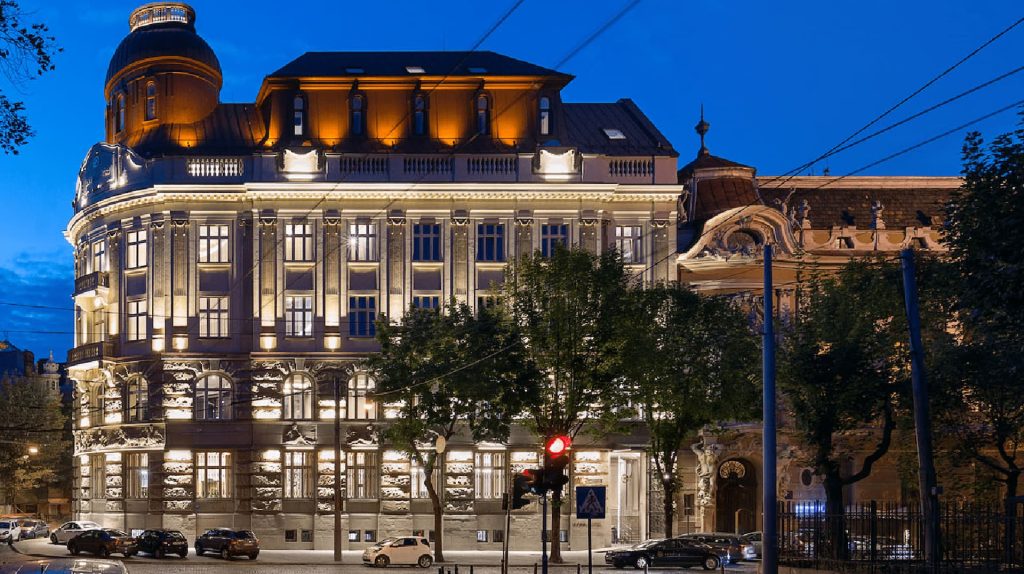
In this article, we have gathered the top places in Lviv worth visiting during your first acquaintance with the city, a ready-made route through the Old Town, and locations for those who want to see it more deeply. Among them is the historic BANKHOTEL building, which once housed the Austro-Hungarian Bank.
What to see in Lviv for the first time: 10 places to get to know the city
If you are in Lviv for the first time and deciding where to go, start with the locations that best showcase the city's architecture, history, and character.
Rynok Square and Lviv City Hall
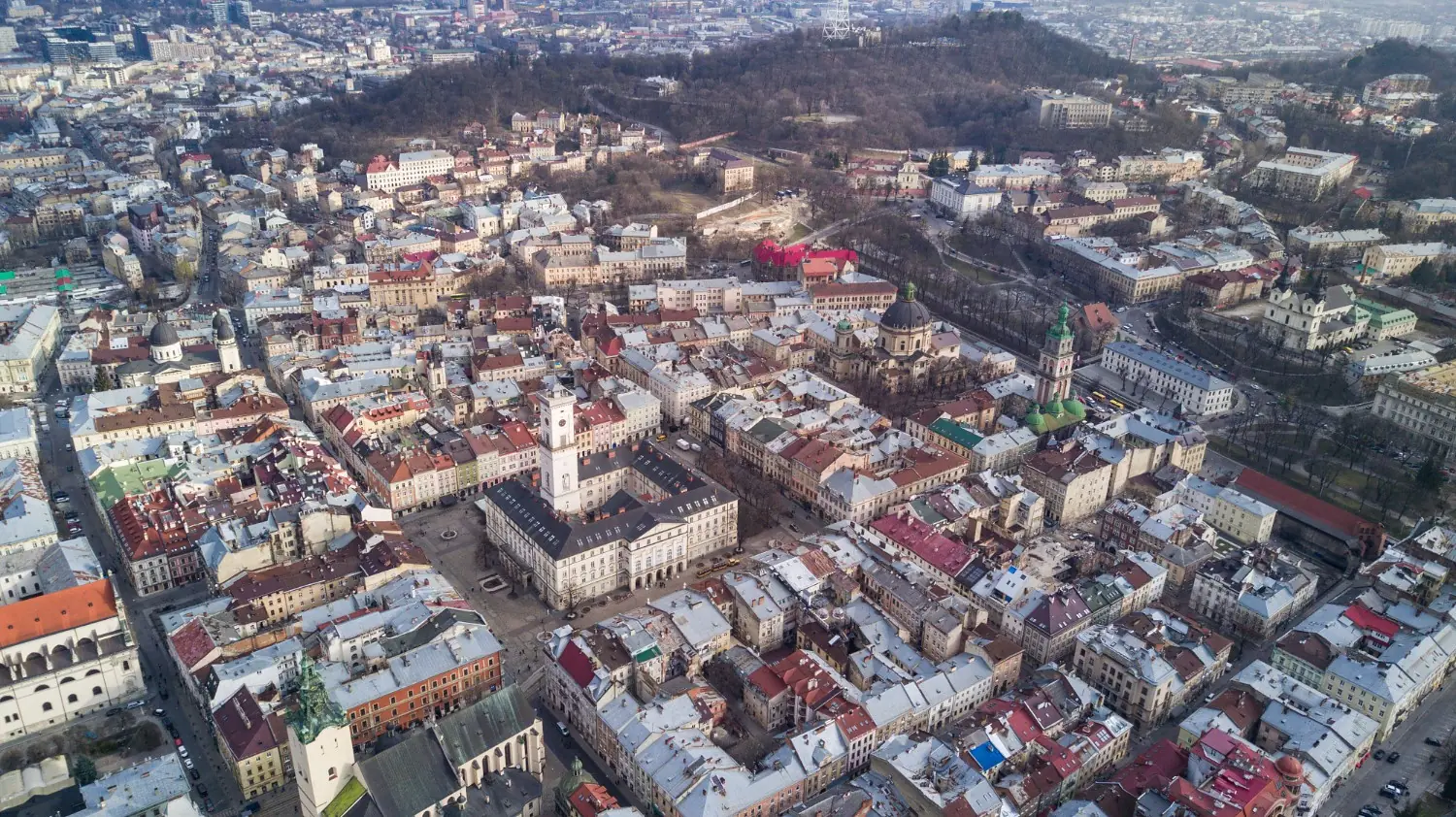
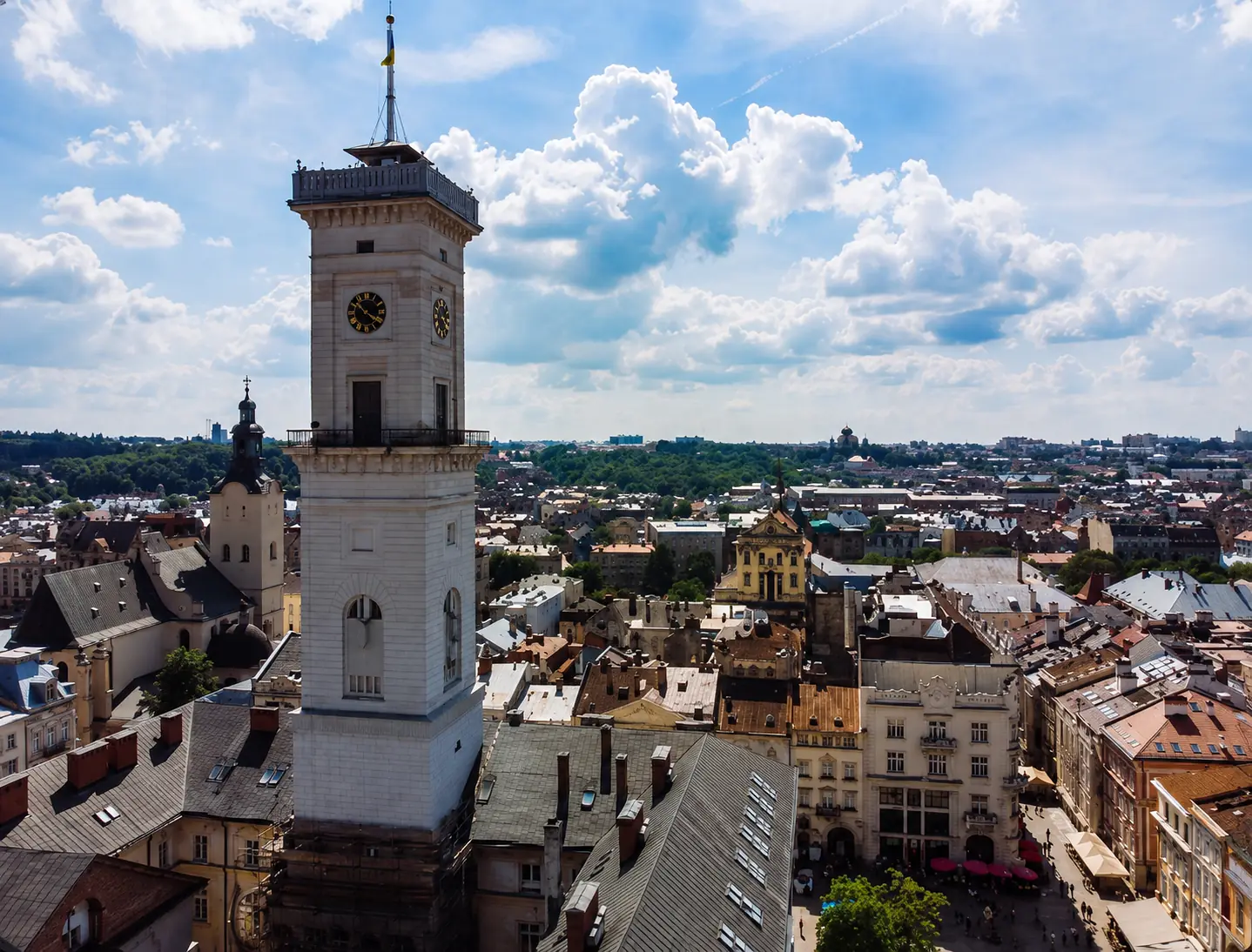
Rynok Square is located in the center of the Old Town. It is surrounded by 43 historic buildings, and in the center rises Lviv City Hall with its observation deck. The climb of 408 steps is rewarded with a panorama of tiled roofs, spires, and towers of the Old Town.
On Rynok Square, we recommend viewing the Black Mansion, the Korniakt Palace, and the Bandinelli Palace, paying attention to the façade decorations and characteristic architectural details. Especially interesting are the carved portals, stone décor, window designs, and decorative elements, through which you can trace how Lviv's architectural styles changed over time.
Lviv Opera House
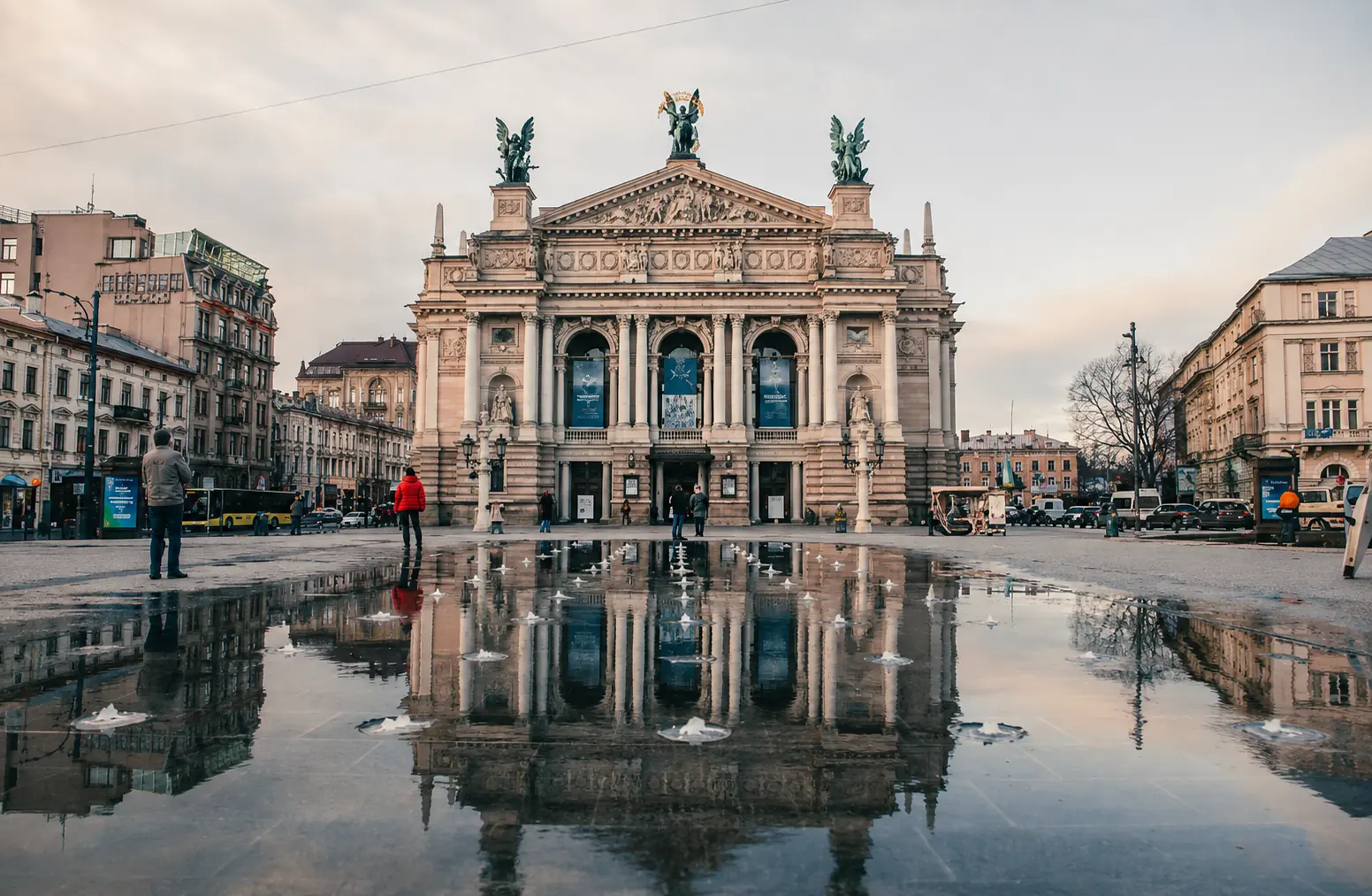
One of the most recognizable buildings on Svobody Avenue was erected at the end of the 19th century to a design by Zygmunt Gorgolewski in the Viennese Neo-Renaissance style. The theater was built near the bed of the Poltva River, which by that time had already been hidden in an underground collector beneath the central part of the city.
From the outside, the building impresses with its grand façade featuring columns, arches, and rich sculptural décor. We advise paying attention to the allegorical figures of Comedy and Tragedy in the side niches of the façade, as well as the bronze sculptures crowning the theater's pediment. Inside, it is worth viewing the grand staircase, the painted ceiling, the decorative ornamentation of the hall, and the theater boxes.
Virmenska Street and the Armenian Cathedral
Virmenska (Armenian) Street is one of the oldest in the city. Here stands the Armenian Cathedral, founded in the 14th century by the Armenian community, which at that time was one of the most influential in Lviv. Inside, it is worth noting the wall paintings by Jan Henryk Rosen, created in the 1920s in the Art Deco style, as well as the mosaics and other decorative elements from the early 20th century.
While walking along the street, it is also worth peeking into the inner courtyards: columns, arcades, and details of the old buildings have been preserved there.
Boim Chapel
Near the Latin Cathedral, on Katedralna Square, stands the Boim Chapel — a family tomb built at the beginning of the 17th century. Its façade is covered with sculptures: biblical scenes, allegorical figures, and floral ornamentation resembling stone lace.
The décor is so detailed that even after a few minutes of viewing, it is easy to find a new, previously unnoticed detail.
Italian Courtyard
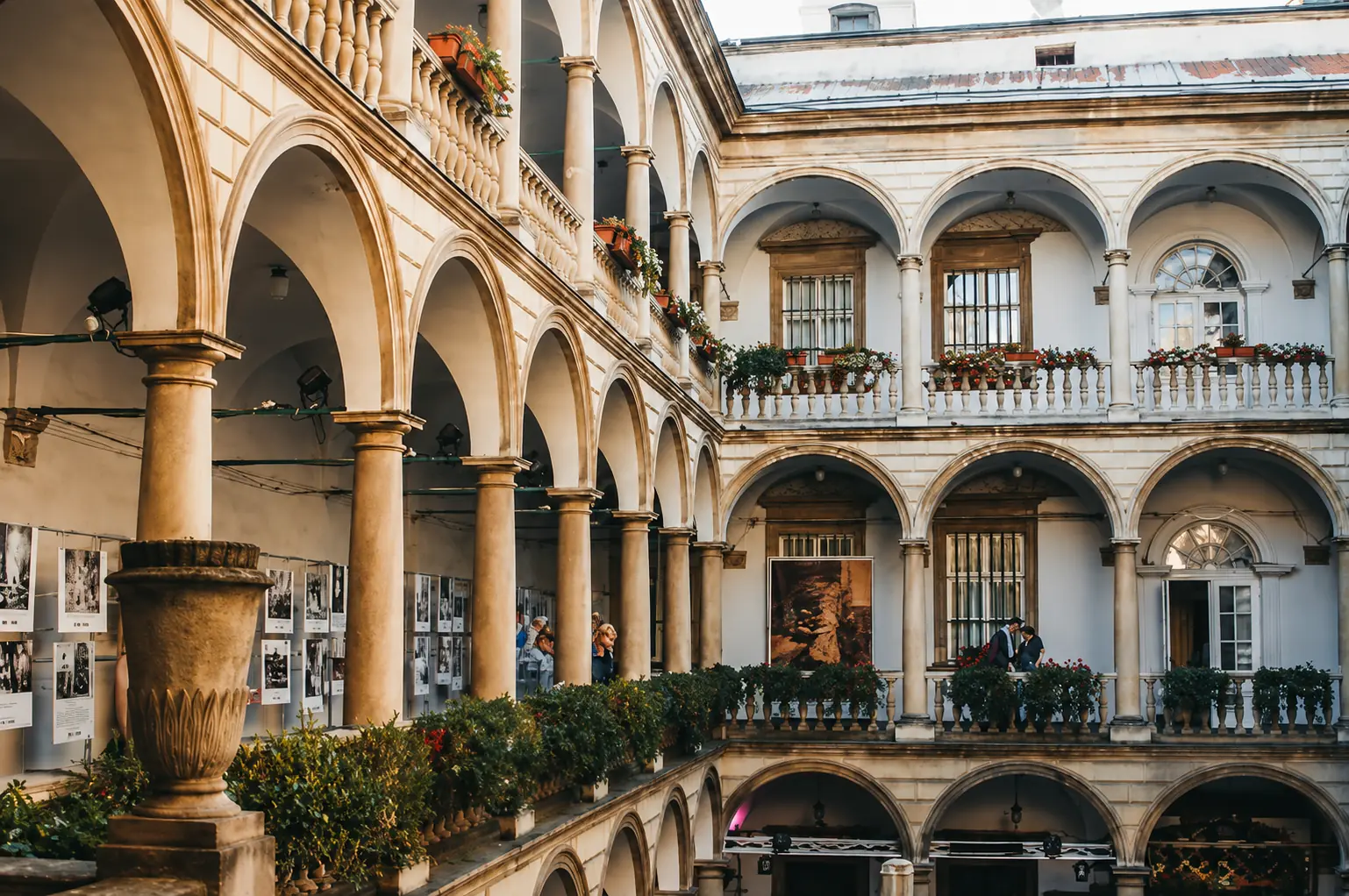
On Rynok Square, in the Korniakt Palace, is the Italian Courtyard, surrounded by three-tiered open galleries. Built in the Renaissance style, it recalls the Southern European influences in Lviv's architecture.
In the warm season, the courtyard becomes a venue for concerts and other cultural events, so it is worth visiting not only for its Renaissance architecture.
Dominican Cathedral
The Dominican Cathedral, or the Church of Corpus Christi, stands out with its massive rotunda and dome in the late Baroque style with elements of Classicism. The present-day church was built in the mid-18th century, with the main construction work lasting from 1749 to 1764. Inside, it is worth noting the sculptural decoration beneath the dome, the altar sculpture, and the historic tombstones and memorial compositions.
Nearby is the Museum of the History of Religion, so a tour of the cathedral can be combined with an interesting excursion.
Potocki Palace
This is one of the most striking palace buildings of 19th-century Lviv. Its architecture belongs to the mature Historicism of the late 19th century and has a distinct French influence. The palace has preserved its historic interiors, and the furniture, decorative art objects, and paintings from the museum collection help recreate the atmosphere of an aristocratic residence of the late 19th and early 20th centuries.
Today, formal receptions and exhibitions are held here, and part of the premises is open to visitors as a museum exposition.
House of Scientists
One of Lviv's most impressive historic buildings appeared at the end of the 19th century as the National Casino for the city's aristocracy. Its Neo-Baroque façade is adorned with sculptures, garlands, mascarons, and other decorative elements, and inside we especially recommend viewing the carved wooden staircase, fireplaces, mirrors, and spacious ceremonial halls.
Today the building operates as a cultural space, hosting various events and offering guided tours.
High Castle
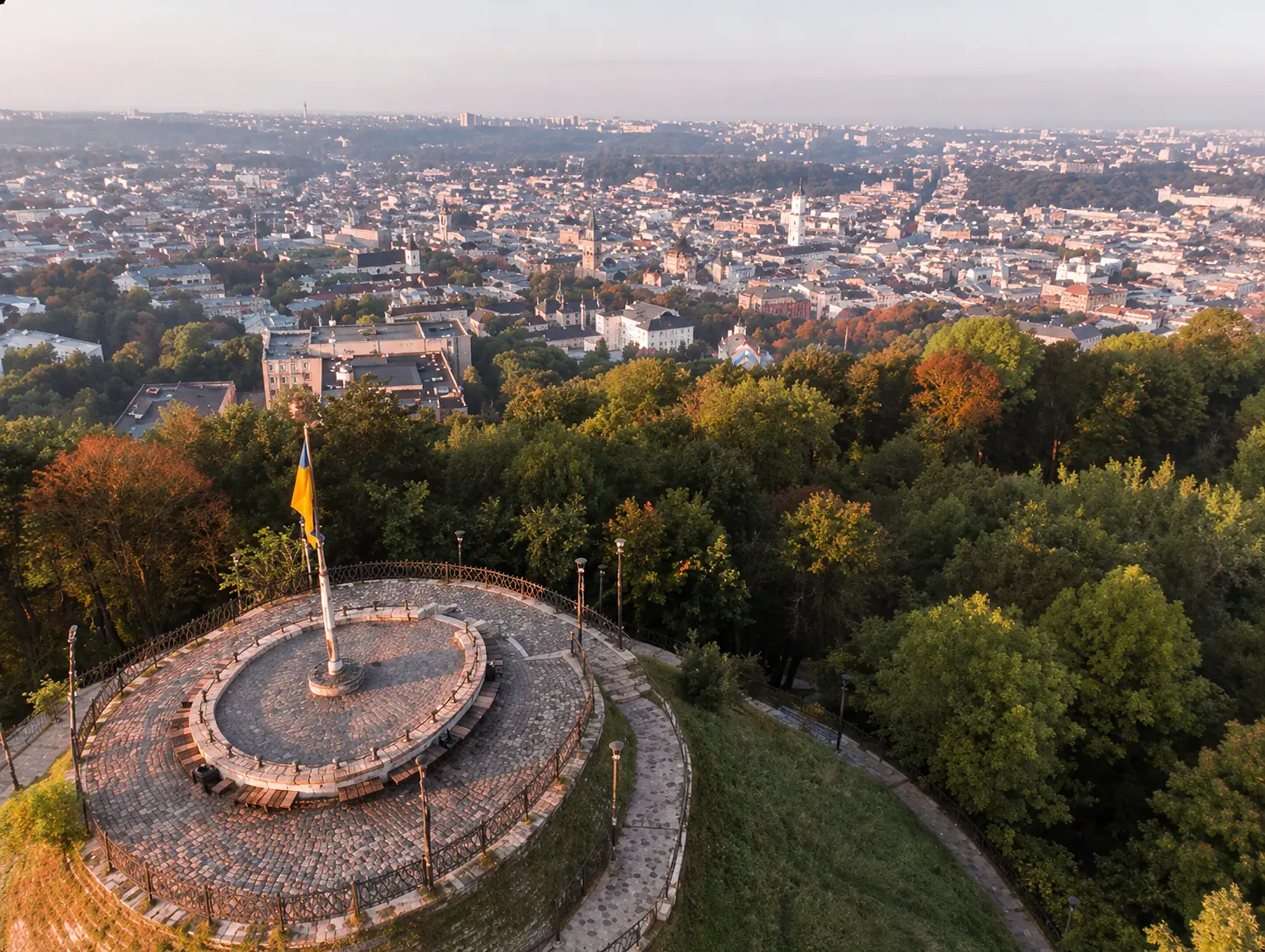
The High Castle hill is one of the best places to take a walk in Lviv and see the city from above. A defensive fortress once stood here, of which only fragments of the walls remain. From the observation deck, a panorama of the Old Town opens up, with tiled roofs, church spires, and the silhouette of the Opera House.
The climb on foot takes about 20–30 minutes. The walk is especially good in the evening, when the sun lights up the roofs of the historic center.
Lychakiv Cemetery
This is one of Lviv's most famous historic necropolises, which at the same time resembles an open-air sculpture museum. Prominent figures of science, culture, and politics are buried here, and among the tombstones you can see allegorical figures, sculptures of angels, family crypts, and monuments of various eras and styles. The atmosphere of the necropolis combines historical significance, the silence of the old alleys, and expressive memorial architecture.
The grounds are large, so for a first visit it is worth choosing a few of the most interesting sections in advance or taking a themed tour.
Where to go in Lviv's Old Town: a one-day route
If time is short and you are wondering what to see in Lviv in one day, focus on the Old Town: start with Rynok Square and Lviv City Hall, then walk along Virmenska Street to the cathedral, peek into the Boim Chapel, the Dominican Cathedral, and the Italian Courtyard. You can finish the walk on Svobody Avenue near the Opera House.
The climb up the City Hall should be planned with the current schedule and registration in mind: on weekdays the tower opens in the afternoon or evening, and on weekends — from 10:00.
Leave the Potocki Palace or the House of Scientists for the second half of the day, and if you still have the energy, head to Lychakiv Cemetery and the High Castle. It is best to allow extra time for each location — large sites can easily take an hour or more. The cemetery is a bit far from the center, so it is better to travel by taxi or public transport.
If you have two days, you can take your time and leave the next day for museums, architectural routes, and unhurried strolls. When deciding what else to see in Lviv, add Stryiskyi Park, the Shevchenkivskyi Hai open-air museum, Pidzamche, or modern cultural spaces beyond the classic tourist route.
Where to go in Lviv for the architecture
What is worth visiting in Lviv to better understand its architectural character? Cathedrals, palaces, Secession-style buildings, and courtyards show how different styles and eras came together in the city.
Cathedrals and churches of Lviv: from Gothic to Baroque
Lviv's sacred architecture clearly shows how the city changed under the influence of different eras, religions, and styles. The Latin Cathedral combines a Gothic core with Baroque reconstructions. St. George's Cathedral is one of the most striking examples of late Baroque in Lviv, and its interior shows features of Rococo. Nearby are the Metropolitan's Chambers, which are part of the St. George's ensemble.
Among other churches worth attention are the Dominican Cathedral with its monumental dome, the Armenian Cathedral with Byzantine motifs, and the former Bernardine Church, whose architecture combines late Renaissance and Mannerism.
Palaces of Lviv and interiors of bygone eras
In addition to the Potocki Palace and the House of Scientists, it is worth noting the Bandinelli Palace on Rynok Square, the Lubomirski Palace, and the former residence of the governors. Their façades, layouts, and decorative ornamentation show how ideas about prestigious urban architecture changed in different periods. For the Lviv aristocracy and wealthy townspeople, such buildings were also a way to emphasize their social standing.
Townhouses built in the late 19th and early 20th centuries often belonged to wealthy bankers and industrialists. Their commissions and financial resources noticeably influenced the development of the city's architecture.
Lviv Secession: the most interesting buildings
At the turn of the 19th and 20th centuries, a style with flowing lines, floral ornaments, stained glass, and expressive wrought-iron décor spread in Lviv's architecture. Its characteristic features can be seen on the façades of buildings on Shevchenka Avenue, Sichovykh Striltsiv Street, and in other districts of the historic center.
While walking, it is worth taking a closer look at the decorative masks, floral stucco, window designs, and asymmetrical façade compositions. Architects of that time designed not only residential buildings but also banks and administrative structures. The building of the former Austro-Hungarian Bank, which today houses BANKHOTEL, also belongs to this era.
Italian courtyards, passages, and hidden architectural details
The most interesting things in Lviv's architecture are often hidden not on the façade, but inside the block. In addition to the already mentioned Italian Courtyard, the city has lesser-known passage courtyards and arcaded passages with stone staircases, old mailboxes, and corner balconies. For example, the history of Lviv's commerce has been preserved in various forms: from the fragments of the ruined Mikolasch Passage to the Krakivskyi Market, which continues the city's trading tradition to this day.
The historic BANKHOTEL building
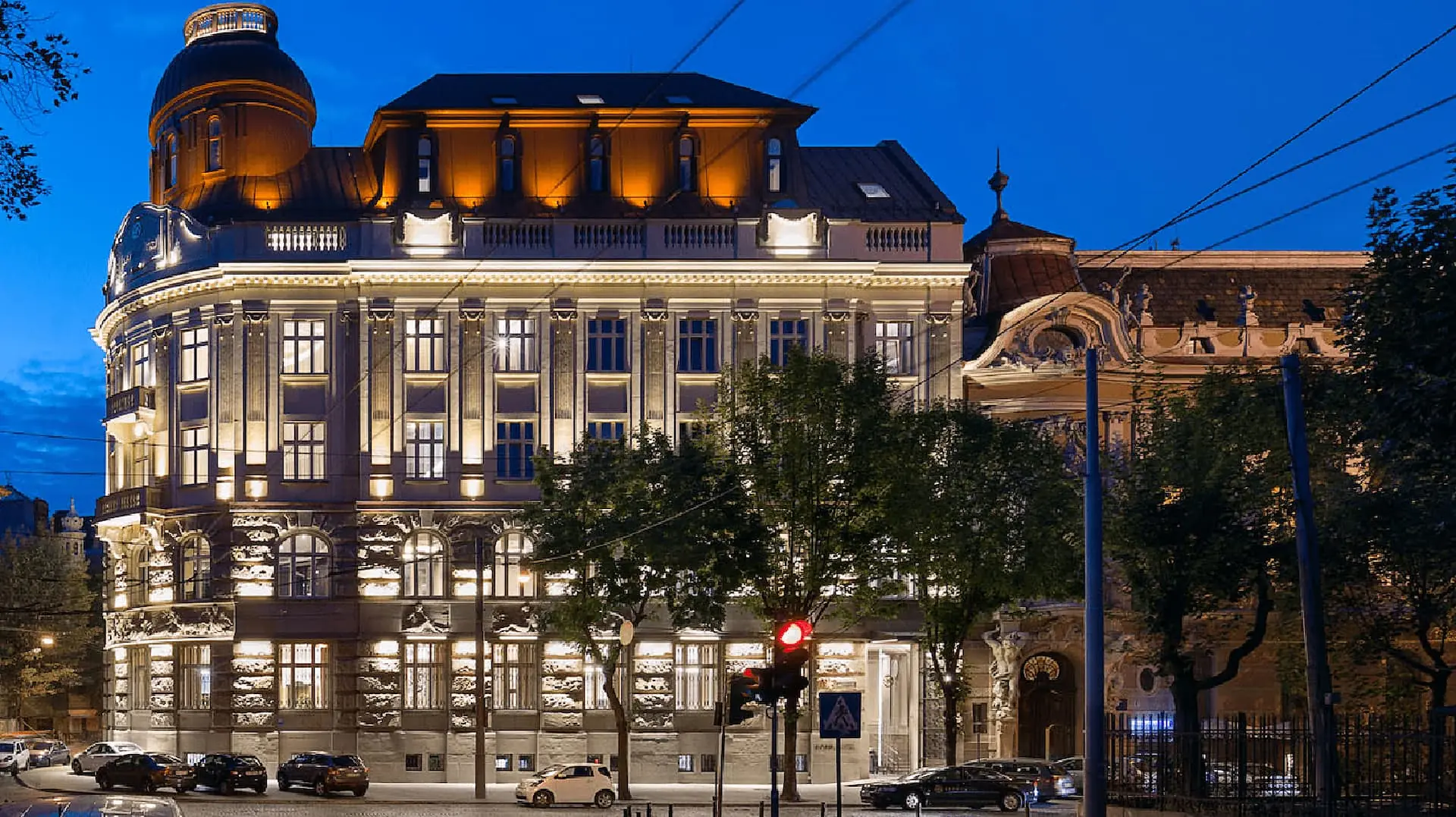
The BANKHOTEL building deserves special attention on an architectural route through Lviv, as it housed the Austro-Hungarian Bank at the beginning of the 20th century. It was built in 1911–1914 to a design by architects Edmund Żychowicz and Michał Łużecki. The building of the former Austro-Hungarian Bank is an example of early 20th-century Neoclassicism, and its monumental façades are complemented by a sculptural frieze by Juliusz Wojciech Bełtowski.
During the building's reconstruction, the aim was to preserve its historic character as much as possible. In the lobby, the marble staircase, stained-glass windows, ceramic floor, and authentic wall décor were retained, and in some rooms the old brick vaults, which had been hidden under plaster, were restored. As a result, the historic elements do not exist separately from the modern interior but become a prominent part of it.
The theme of the former bank continues in the hotel's artistic design as well. BANKHOTEL permanently features the art projects "Banknotes and Shahs" and "Coins": the first is dedicated to the money of the Ukrainian People's Republic, its authors, and the history of its creation, and the second — to the commemorative coins of the National Bank of Ukraine. Thus, the building maintains a connection with its financial past not only in its architecture but also in the details of its modern space.
Where to stay for convenient exploring
To leave more time for walks rather than travel, it is worth choosing a hotel near the historic center. BANKHOTEL is located a few minutes' walk from the Old Town in the historic building of the former Austro-Hungarian Bank, built in 1911–1914.
After a busy day, you can relax in the SPA area, sauna, or with a massage, and in the evening head up to the Rooftop Wine & Cocktail Bar with its panoramic terrace. For dinner, you can visit the SAFE restaurant, located within the walls of the former Austro-Hungarian Bank, which serves modern Mediterranean cuisine.
To make the most of your time in the city, you can explore the rooms and accommodation options in advance on our website.